
“What should I cook?” is difficult because it hides several decisions: what sounds good, what is available, how much time and attention you have, and whether the recipe comes from a source you trust.
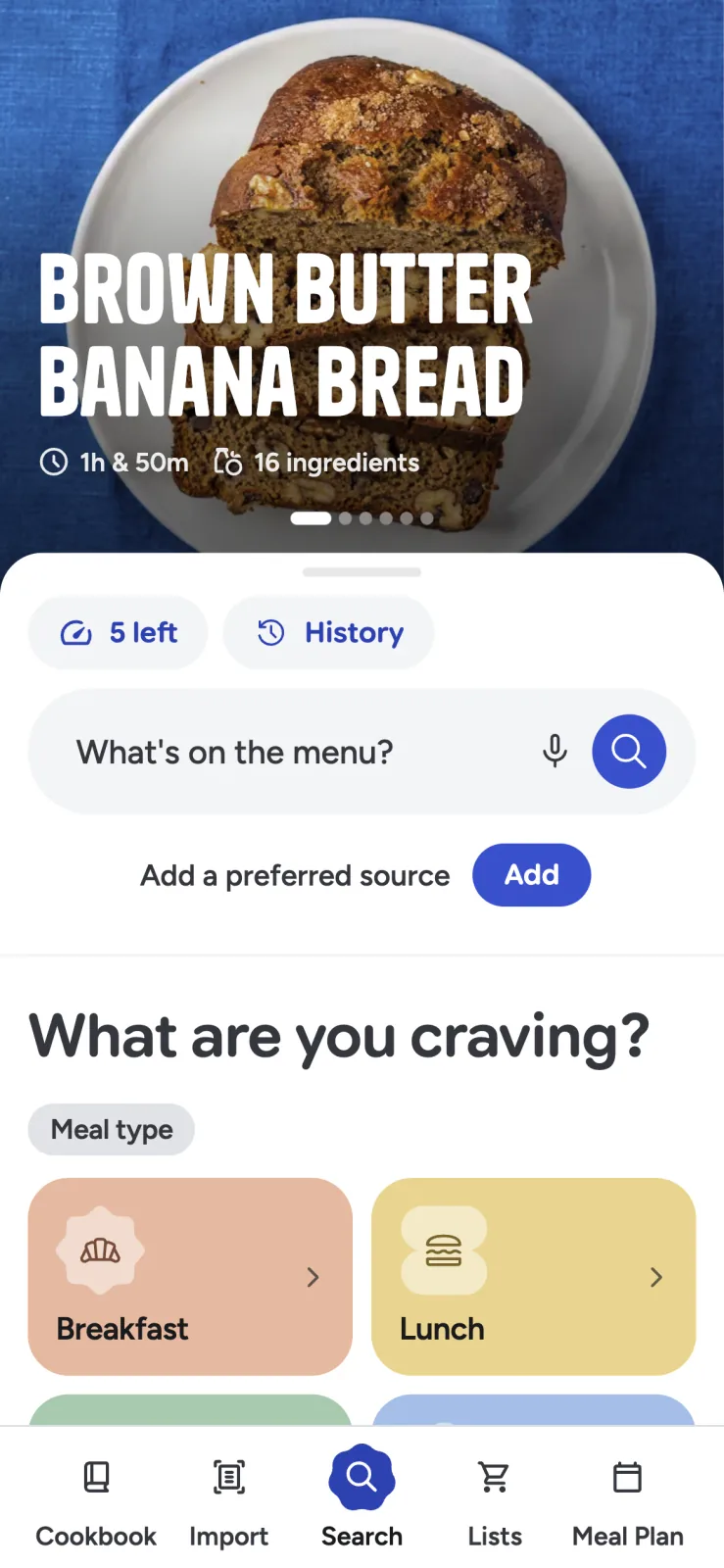
A useful search makes those constraints visible. Recipe Scout combines web discovery with your saved cookbook, so the result can be something new or a proven recipe you already own.
Build the query from four clues
Start with the strongest clue and add only what changes the answer:
- Dish or craving: soup, crispy tacos, chocolate cake, bright salad.
- Ingredient: chicken thighs, lentils, ripe peaches, leftover rice.
- Constraint: 30 minutes, one pan, vegetarian, no oven.
- Style: Thai-inspired, Mediterranean, smoky, high protein.
“Quick vegetarian dinner with rice” is more useful than “dinner.” “Crispy tofu” is better than a paragraph listing every bottle in the refrigerator.
Match the query to the real situation
These examples show how one extra constraint changes the search:
| Situation | Weak search | More useful search |
|---|---|---|
| Tired Tuesday | chicken dinner | one-pan chicken thigh dinner under 35 minutes |
| Pantry night | lentils | red lentil soup with canned tomatoes, no coconut milk |
| Produce to use | zucchini recipe | vegetarian zucchini main dish, not pasta |
| Baking project | chocolate cake | one-layer chocolate cake by weight, no mixer |
| Leftovers | rice bowl | leftover rice dinner with eggs and frozen peas |
Do not add constraints that are merely preferences if they remove too many good options. Search broadly, then filter as needed.
Decide how much work you can do
Total time can be misleading. A stew may take two hours but require only 20 minutes of active work; a 30-minute stir-fry may demand constant chopping and attention.
Before choosing, check:
- Active preparation time
- Total elapsed time
- Number of pans or appliances
- Marinating, resting, or chilling time
- Familiarity with the technique
- Whether you need leftovers
Recipe Scout supports difficulty choices for quick and easy, balanced, or more ambitious searches. Choose the effort level before falling in love with the photograph.
Prefer sources whose recipes you understand
A trustworthy source does not need to be famous. It should provide enough information to evaluate and reproduce the dish.
Look for:
- A clear yield and ingredient quantities
- Steps in a logical order
- Doneness cues in addition to times
- Notes about important substitutions
- Technique images when appearance matters
- A correction or update process
- Author or publication identity
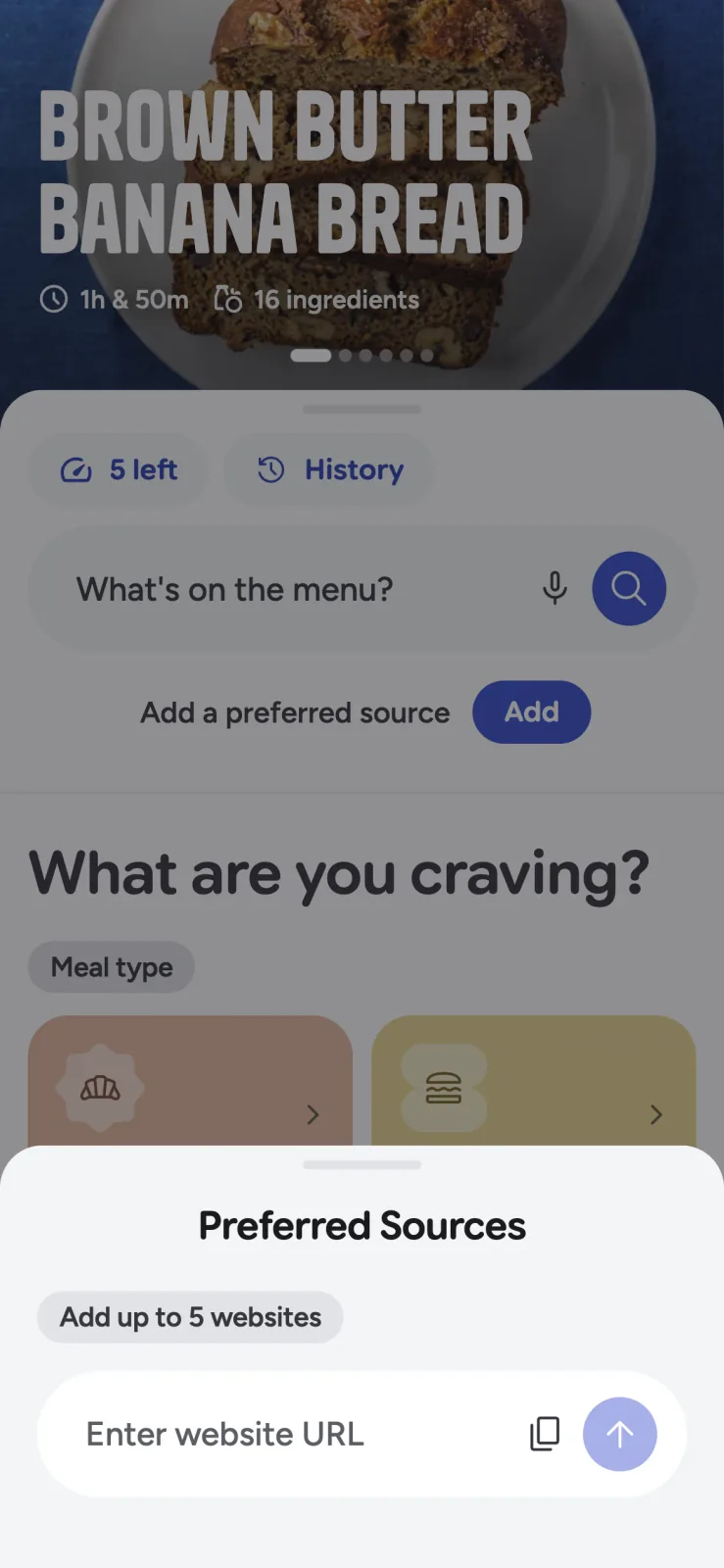
If you repeatedly succeed with a food blog or creator, add it as a preferred source. Recipe Scout can prioritize those sites while still searching more widely.
For baking, preservation, allergy-sensitive cooking, and regional specialties, the author’s testing method and expertise may matter more than a high-level rating.
Search your own cookbook before the web
The recipe you need may already contain your notes, preferred pan, and tested substitution. Search saved recipes by a distinctive ingredient or word from the title before importing another version.

When you find a similar new recipe, compare it with your saved one. Does it offer a genuinely different method or solve a known problem? If not, add the useful idea to your existing notes rather than creating a duplicate.
Recipe Scout indicates when a discovery result is already in your cookbook, helping you return to the version with your history.
Evaluate a result before committing
Open the full recipe, not only the search card. Confirm:
- You can eat every ingredient safely.
- The required equipment is available.
- The yield matches the meal.
- The total time includes resting or marinating.
- Expensive ingredients are essential or replaceable.
- The method includes enough detail for your experience level.
- The source gives appropriate safety information for the dish.
A polished photo is evidence of presentation, not proof that the recipe was tested or that it fits tonight.
Save with a next action
When a result passes the check, decide what it is for:
- Put it in Recipes to try if it is inspiration for later.
- Add it to this week’s meal plan if the date is real.
- Add ingredients to a grocery list only after confirming servings.
- Mark it as liked or favorite after cooking.
- Record substitutions, timing, and equipment notes while they are fresh.
If your saved list is already crowded, use a simple collection system before importing dozens more.
Know when inspiration is not a recipe
Some social posts and short videos show an appealing idea without complete quantities or steps. Save the source as inspiration, but do not pretend missing instructions were published. If you develop your own version, label it as an adaptation and note what you changed.
Recipe Scout’s import guide explains how to review social and web captures without losing attribution.
Search for the next decision, not endless options
Good recipe discovery reduces the distance between a craving and a realistic meal. Begin with the clue that matters, add the real constraint, evaluate the source, and give the chosen recipe a next action.
Explore recipes with Recipe Scout using one ingredient you need to use and one honest time limit. That is usually enough to turn a vague craving into dinner.


