
A meal plan fails when it describes an imaginary week. Seven ambitious dinners, no leftovers, and no room for a late meeting may look organized on Sunday and feel impossible by Wednesday.
A useful plan starts with the calendar, reuses ingredients deliberately, and includes a fallback. Recipe Scout connects saved recipes, a weekly schedule, and grocery lists so the plan can become a practical shopping and cooking workflow.
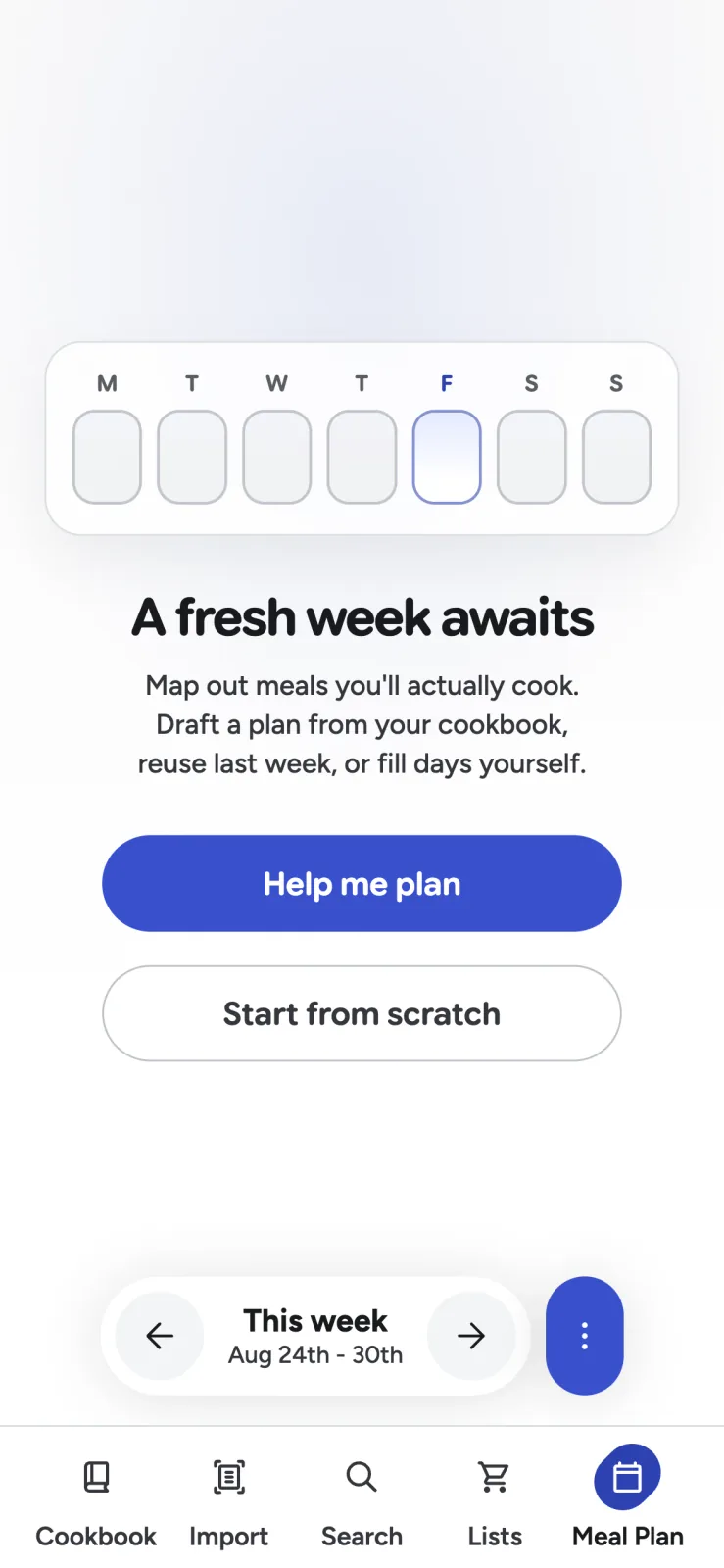
Begin with the week, not the recipes
Mark the constraints before choosing food:
- Late work, school, or appointment nights
- Evenings when someone else cooks
- Travel, guests, or meals away from home
- Days when leftovers would be useful
- One night with time for a longer project
Plan only the meals that normally create stress. If breakfast is already predictable, there is no prize for filling every breakfast square.
Assign the easiest meals to the hardest days. A 20-minute skillet belongs on the evening with soccer practice; the new bread recipe belongs on a quieter weekend.
Check the kitchen before choosing meals
Look for ingredients that should shape the week: produce nearing its peak, open dairy, thawed meat, half a loaf of bread, or a freezer meal that has waited long enough.
Then choose recipes that use those foods. The U.S. EPA’s guidance for preventing wasted food at home recommends planning, prepping, and storing food deliberately; using what you already own is the cheapest first step.
Use a five-part dinner pattern
A realistic week does not need seven unrelated recipes. Try this pattern:
- Two dependable favorites for busy nights.
- One cook-once, eat-twice meal with intentional leftovers.
- One new or seasonal recipe for variety.
- One use-it-up meal built around perishable food already at home.
- One rescue meal from pantry or freezer staples.
The remaining nights can be leftovers, plans outside the home, or open space.
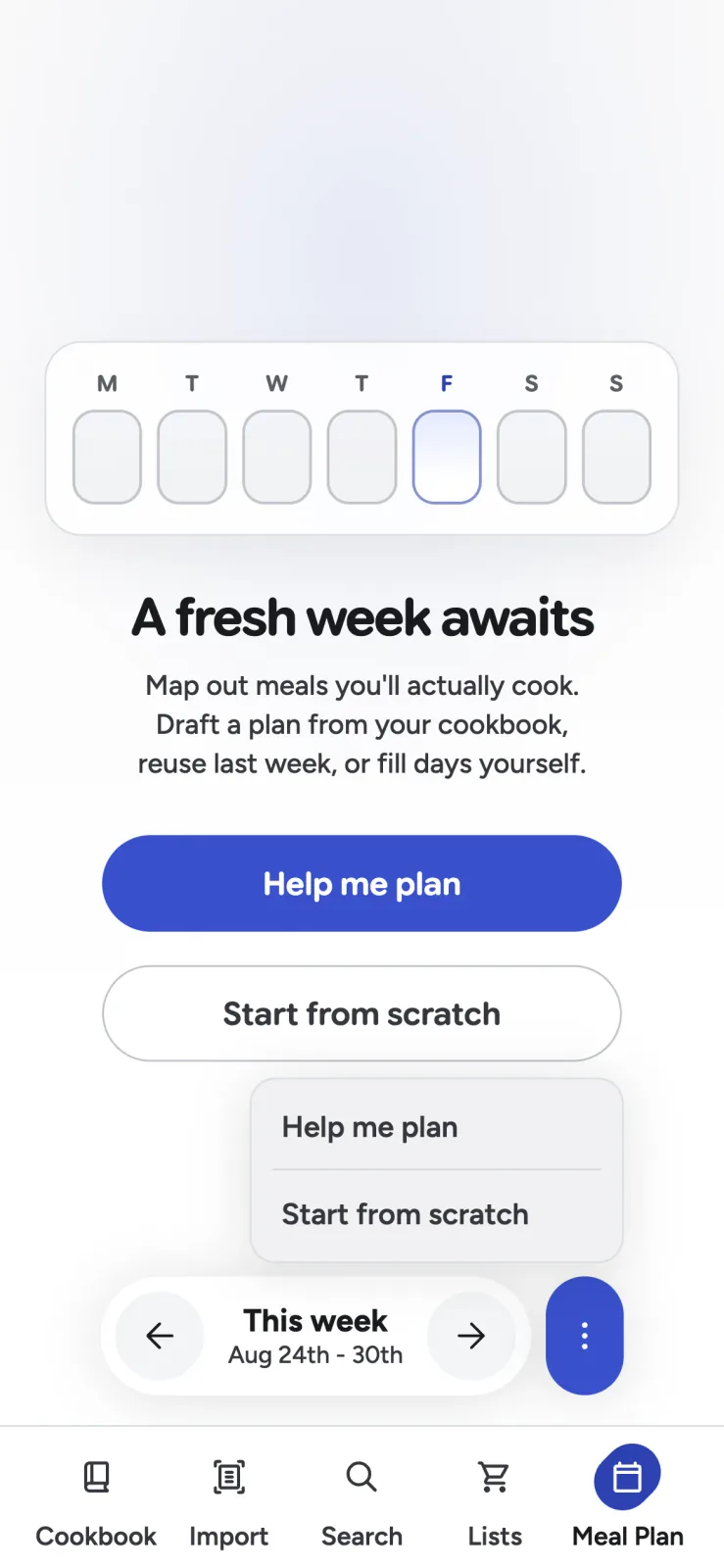
A worked example for a busy week
Suppose Monday and Thursday are late, Wednesday is open, and friends are coming Saturday.
| Day | Plan | Why it fits |
|---|---|---|
| Monday | Ten-minute egg fried rice | Uses leftover rice; fast after a late day |
| Tuesday | Sheet-pan chicken and vegetables | Dependable meal with extra portions |
| Wednesday | Leftover chicken grain bowls | Reuses Tuesday’s chicken and herbs |
| Thursday | Freezer dumplings and greens | Rescue meal with almost no preparation |
| Friday | Open night | Leftovers, takeout, or a changed plan |
| Saturday | New baked pasta recipe | More time and enough food for guests |
| Sunday | Use-it-up soup | Finishes vegetables and opens freezer space |
This plan reuses ingredients without repeating the same plate. It also protects Friday from becoming a failure if earlier meals shift.
Let a planning assistant draft, then edit
Recipe Scout’s Help Me Plan can draft meals using your cookbook, preferences, and meal history. Treat the result like a proposed schedule.
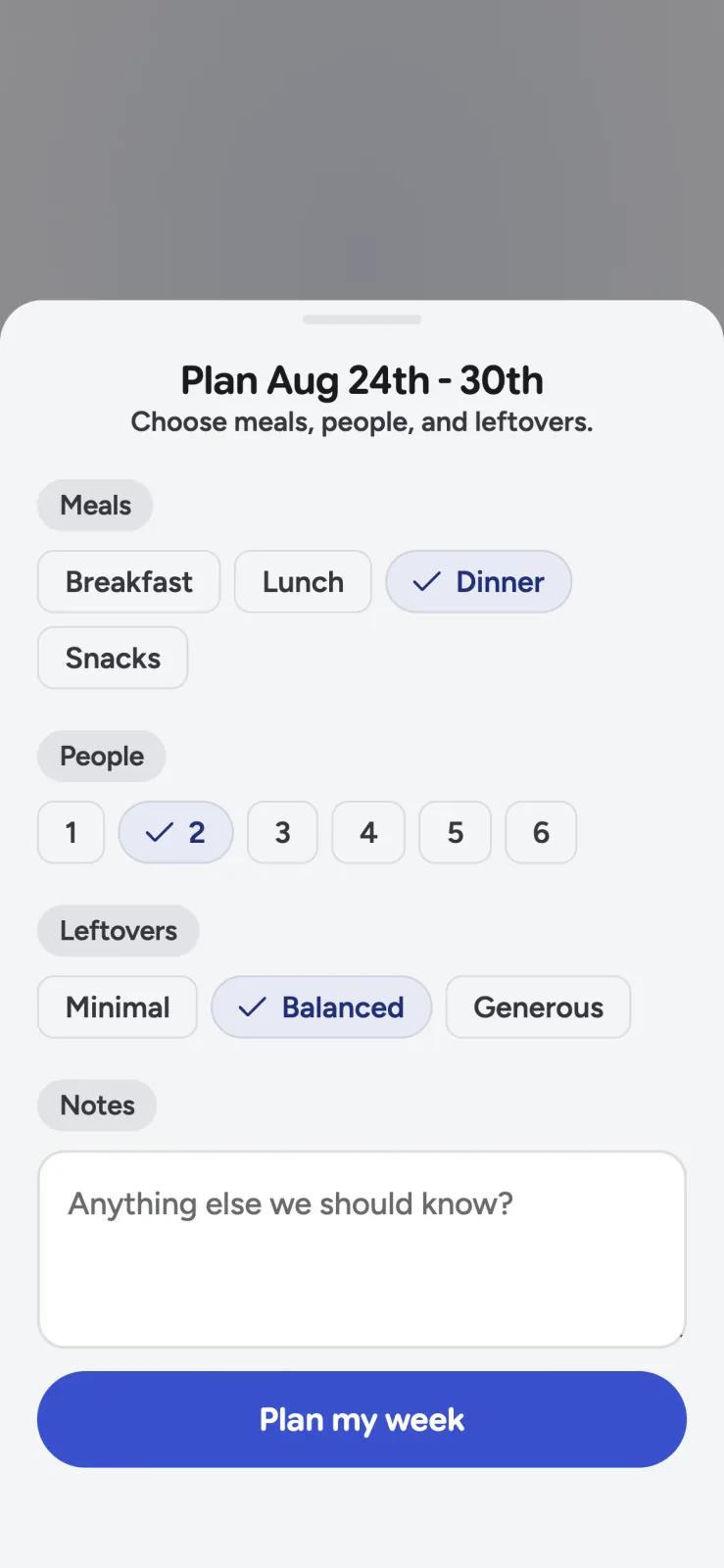
Review every draft with four questions:
- Does the active cooking time fit that day?
- Are several meals competing for the same oven or pan?
- Will highly perishable ingredients be used early enough?
- Is there space for leftovers and changing plans?
Replace anything that fails the test. Automation is valuable when it shortens the blank-page stage, not when it dictates dinner.
Reuse ingredients on purpose
Ingredient overlap saves money only if it is planned. Buying cilantro for tacos, bowls, and soup is useful; buying three bunches because the recipes were never combined is not.
Look for overlap in foods that are costly or quick to spoil:
- Fresh herbs and leafy greens
- Bread, tortillas, and buns
- Specialty cheese
- Broth, cream, or coconut milk
- Large packages of meat, tofu, or mushrooms
Use the most perishable version early. A delicate herb may belong on Monday and Tuesday; cabbage can wait until the end of the week.
Convert the plan into one grocery list
After the schedule looks realistic, generate or assemble the list. Recipe Scout can merge compatible ingredients, organize them by category, and retain the source recipe for each quantity.
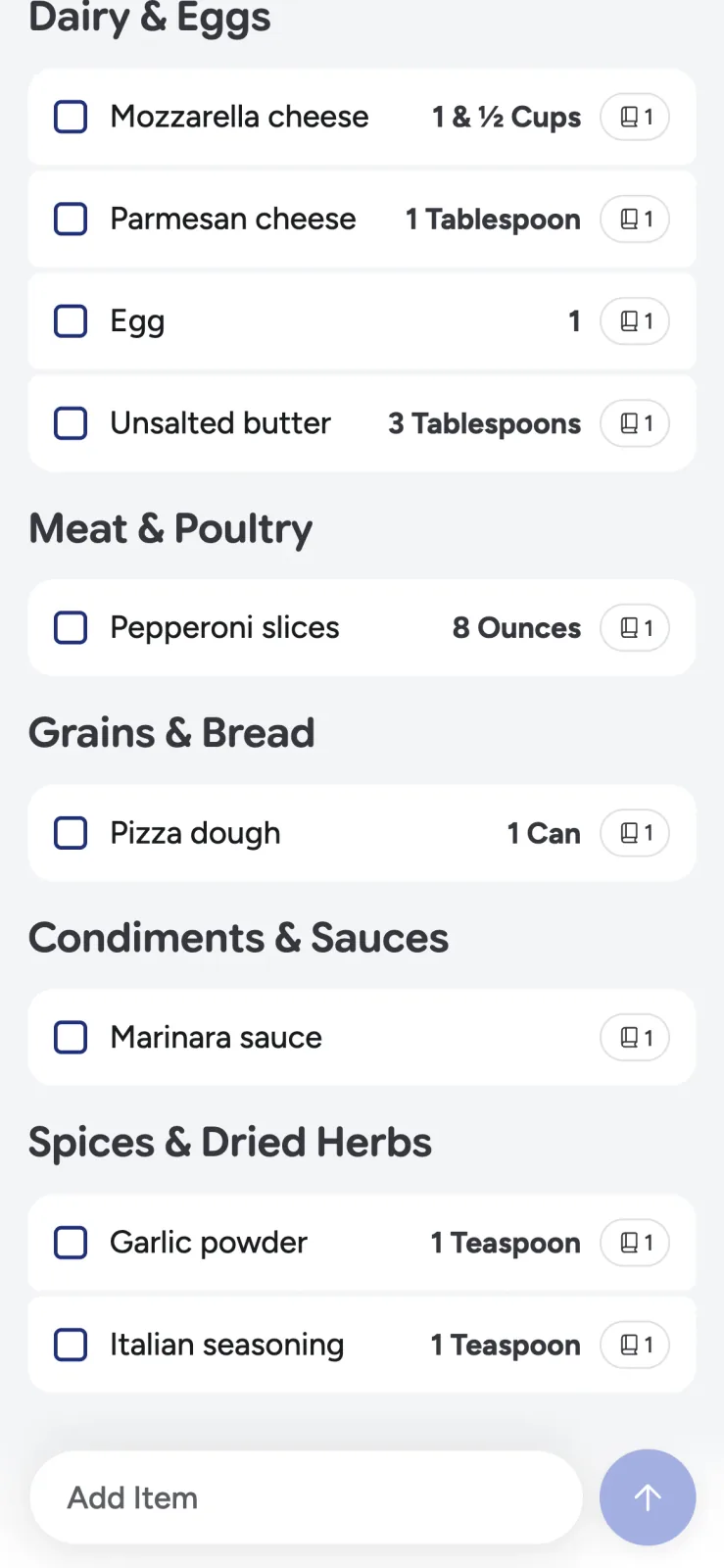
Recipe Scout Plus can generate a list from a selected date range and account for repeated recipes at their planned scale. Manual recipe-to-list adding works for other workflows. In either case, check the pantry and resolve optional ingredients before shopping.
Use the complete recipe-to-grocery-list workflow if several dishes share ingredients or serving sizes change.
Plan leftovers safely
“Leftovers on Wednesday” is only a plan if Tuesday’s meal produces enough food and the extra portion is stored promptly. Divide large amounts into shallow containers so they cool efficiently, label them, and reheat safely.
The USDA leftovers guide advises refrigerating perishable food within two hours—one hour above 90°F—and reheating leftovers to 165°F as measured with a food thermometer.
Use a 15-minute planning routine
- Scan the calendar.
- Check the refrigerator, freezer, and pantry.
- Pick favorites for the busiest nights.
- Add one new recipe and one use-it-up meal.
- Schedule leftovers and an open night.
- Keep one rescue meal available.
- Build the grocery list and remove items already at home.
That is enough structure to reduce decisions without trying to predict every appetite.
Make the plan easy to change
The best weekly meal plan is not the one that fills every slot. It is the one that still helps when Wednesday moves to Thursday.
Plan a week with Recipe Scout, beginning with three dinners rather than seven. Expand only when the smaller plan proves useful.


